Healthy Lettering: A Branding Asset Review for Small Businesses
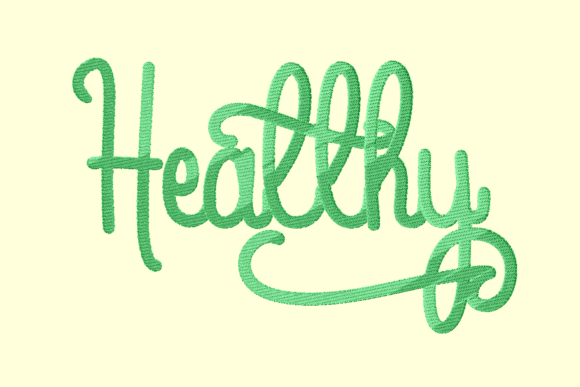
When a client sends over a new design for merchandise or patches, my first step is always to assess its character and commercial viability. Healthy Lettering, as described, immediately suggests a certain warmth. The name and its stated purpose—for pillows, blankets, and home trinkets—point to a friendly, approachable, and perhaps slightly rustic aesthetic. This isn't a stark, corporate font; it feels crafted, inviting, and perfect for businesses that want to communicate care, quality, and a personal touch.
The Visual Personality & Brand Identity Impact
For a boutique, café, bakery, or creative studio, the visual tone of your branded merchandise is a silent ambassador. Healthy Lettering, with its implied handmade feel, can instantly elevate a simple tote bag or apron from a generic item to a premium, branded product. This design style leans into the authenticity that customers seek from small businesses. Using it on uniforms or product packaging accents doesn't just label an item; it reinforces your brand's story as one focused on craftsmanship and wholesome values.
Consider a local florist embroidering this lettering onto canvas tote bags given as customer gifts. Or a pet brand using it as a chest logo accent on staff polo shirts. The design fosters trust and recognition by feeling consistent and intentional. It moves beyond mere decoration to become a key design asset that adds tangible product value and enhances buyer engagement with your brand.
Real-World Application for Business Merchandise
Healthy Lettering's potential shines across a wide range of custom apparel and small business merch. Let's walk through some real scenarios.
Embroidered Patches & Product Labels
This is a primary use. An embroidered patch using Healthy Lettering can serve as a superb product label sewn onto handmade blankets or pillows from an Etsy shop. It can also be a standalone merchandise item—a pin-on patch for event merch or customer jackets. The key consideration here is size. You must check how the design performs at a small patch size, perhaps 2 inches tall. Does the lettering remain clear and legible? Detailed outlines can become muddy if scaled down too far without adjustment.
Staff Uniforms & Workwear
For caps, aprons, and work shirts, Healthy Lettering offers a softer alternative to bold, blocky logos. As a sleeve detail on a café server's shirt or as the central apron design for a bakery, it conveys professionalism without being austere. On curved surfaces like cap fronts, ensure the design's stitch density and layout are suitable; a too-dense design on a curved base can lead to puckering.
Tote Bags & Boutique Merchandise
This is a natural fit given the product description. Embroidering Healthy Lettering onto canvas or cotton tote bags creates a classic, reusable merchandise piece for any shop. The design likely has enough visual weight to stand alone as the tote bag mark, creating a clean, branded look that customers will use daily, extending your brand's visibility.
Critical Considerations for Professional Use
As an embroidery designer working on commercial embroidery projects, my practical notes for using any design like Healthy Lettering are always the same. They ensure the finished product meets business standards.
- Test in Monochrome First: Run a test stitch-out in black and white thread on your actual fabric (like a twill for patches or canvas for bags). This reveals the true structure, spacing, and any potential issues with small lettering without color distracting you.
- Review Thread Color Contrast: For dark uniforms or fabrics, you may need to use a lighter thread or even a backing patch to ensure the friendly lettering remains readable and pops appropriately.
- Inspect Fabric & Stabilizer Combo: Fabric texture matters. On a napped blanket versus a smooth polo shirt, the same design can look different. Always use the proper stabilizer to maintain clean letterforms on the chosen material.
- Confirm Technical Details: While Healthy Lettering comes with multiple embroidery file formats, you must check the specifics for your machine and project. Confirm the necessary hoop size for your desired application and, crucially, verify the commercial licensing terms before any business production.
- Create a Printable Mockup: Before stitching a batch of 50 aprons, create a digital mockup for client approval. Place Healthy Lettering beside their other logo assets to check for visual consistency across all branded materials.
Where to Use With Extra Care
Some applications require a more cautious approach. For tiny lettering designs, the charm of Healthy Lettering could be lost if the stitch count is too high for a very small area, leading to a stiff, dense patch. Items that need frequent washing, like staff shirts, require a robust embroidery construction; ensure stitch density isn't so high that it stresses the base fabric, causing premature wear.
Also, consider the backdrop. If your brand's uniforms are a textured material like a knit, test thoroughly. The design's elegance depends on clear definition, which can be compromised on highly textured fabrics without correct stabilizer and thread choice.
The Final Word for Merch Creators
Healthy Lettering presents itself as a versatile digital embroidery file with strong potential for businesses built on personality and quality. Its friendly, handmade presentation is a genuine asset for building a cohesive and appealing brand identity through physical merchandise. By following professional embroidery practices—testing on real fabric, checking scalability, and confirming all technical and legal details—you can transform this design from a file into a powerful, profit-generating branded product add-on for your small business.