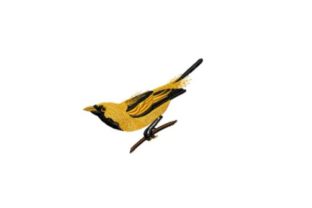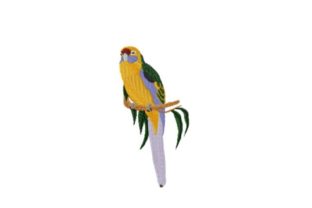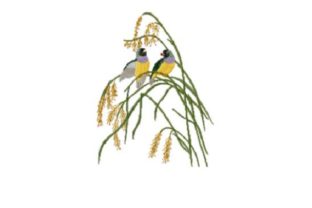
Painted Finch: A Professional Review for Merch & Branding
As an embroidery designer who creates custom assets for small businesses daily, my first impression of the Painted Finch machine embroidery design is one of classic, approachable elegance. The title suggests a natural, illustrative quality, which translates into a design that feels both friendly and professional. It avoids being overly cartoonish or starkly modern, landing in a versatile middle ground that can adapt to many brand personalities—from a rustic café to a chic boutique or a creative pet brand.
Visual Personality & Business Branding Potential
For a small business owner, your logo or branded accent needs to communicate your identity instantly. The Painted Finch, as a bird motif, inherently carries connotations of nature, freedom, craftsmanship, and gentle beauty. This makes it an excellent candidate for businesses wanting to project a handmade, authentic, or eco-friendly vibe. When considering brand identity, this design can serve as a powerful visual anchor. It’s decorative enough to stand alone as a beautiful piece on merchandise, yet structured enough to feel like a legitimate brand mark when used consistently.
Imagine this design embroidered on a bakery’s apron, a florist’s tote bag, or a pet brand’s staff polo. It elevates the item from simple apparel to branded merchandise that tells a story. Customers subconsciously associate the quality and detail of the embroidery with the quality of your business, building trust and enhancing perceived product value. For an Etsy seller or a handmade shop, using the Painted Finch as a label or patch on your products adds that crucial layer of professional finish that engages buyers and encourages recognition.
Real-World Application: Where This Design Excels
Let’s translate that potential into specific, real business use cases. The description notes it will look great on any fabric, which is a promising start for versatility.
Embroidered Patches & Product Labels
The Painted Finch could be superb for creating custom embroidered patches. Patches are incredibly versatile for small business merch: they can be iron-on or sew-on labels for product packaging, attached to customer gift bags, or sold as standalone merchandise. The key here will be testing the embroidery file at a small patch size. A design with too much detail or tight spacing can lose clarity when miniaturized. Before production, create a test patch to ensure the finch’s character remains clear at, say, 2 inches wide.
Apparel & Uniform Accents
For staff uniforms, aprons, work shirts, or caps, this design offers a lovely accent. On a chest logo or sleeve detail, it provides visual interest without overwhelming the garment. For cap embroidery, the central area of a cap front is ideal, but the design’s adaptability to the curved surface must be verified. A test on the actual cap fabric with proper stabilizer is non-negotiable.
Tote Bags & Boutique Merchandise
Tote bags are a staple of small business merchandise. A well-placed Painted Finch on a tote bag makes it a branded item customers will use daily, carrying your brand into the world. Similarly, on a boutique’s sweater or a studio’s hoodie as event merch, it acts as a decorative yet branded mark. The design’s “lovely” aesthetic, as per the description, directly supports creating merchandise that feels premium and giftable.
Practical Considerations & Designer Notes
Moving from potential to finished product requires practical steps. As a designer reviewing this for commercial embroidery, here are my core notes for any business or decorator planning to use the Painted Finch.
- Test in Monochrome First: Run a test in black thread on white fabric and white thread on black fabric. This checks the design’s fundamental contrast and readability, crucial for dark uniforms or varied fabric choices.
- Evaluate Stitch Density & Fabric Texture: High stitch density can be tough on lightweight or textured fabrics. Test on the actual fabric you plan to use—a linen tote, a cotton polo, a denim apron—to ensure the embroidery sits cleanly without puckering.
- Create a Printable Mockup for Client Approval: Before stitching hundreds of items for your business, create a digital mockup placing the design on your product. This confirms visual consistency with your other design assets and ensures the scale and placement align with your brand vision.
- Thread Color Strategy: The design’s name implies color, but thread choice is your branding opportunity. Select colors that align with your brand palette to turn a generic beautiful design into your specific brand asset.
- Confirm Commercial Licensing: The description mentions it’s an original quality embroidery. Before any business use, you must explicitly confirm the digital embroidery file comes with a license for commercial embroidery. This is essential for legal production of merchandise.
- Hoop Size & Stabilizer: While specific hoop size isn’t provided, the design’s intended scale will determine the hoop needed. Always use the correct stabilizer for your fabric type; it is the unsung hero of a professional-looking embroidered product.
Where to Use With Care
Even versatile designs have limits. For the Painted Finch, exercise caution in a few key scenarios.
- Very Small Patch Sizes: As mentioned, intricate details may blur. If your product label needs to be under 1.5 inches, a test run is mandatory.
- Items Requiring Frequent Industrial Washing: If stitching on kitchen aprons or work shirts that will endure harsh, frequent washing, review the stitch structure. Designs with many fine outline stitches may require reinforcement to maintain integrity over time.
- Directly on Highly Textured or Dark Fabrics: Without careful thread color contrast and stabilizer choice, the design can get lost on textured fabrics like coarse wool or can be invisible on deep navy or black fabrics without a bright thread selection.
Final Verdict for Small Business Merch
The Painted Finch embroidery design presents a significant opportunity for small businesses looking to enhance their branded merchandise with a touch of crafted elegance. Its aesthetic strikes a balance that can serve rustic, handmade, and premium brands alike. When applied thoughtfully—with proper testing, licensing, and technical setup—it can transform simple apparel and products into cohesive, valuable brand assets that foster customer recognition and trust. My recommendation is to treat it not just as a decoration, but as a core component of your visual identity. Start with a test patch, envision it across your entire merch line, and let this lovely bird carry your brand’s story into every stitch.